Hand Gesture Recognition Based on EEG-EMG Coherence Analysis and Convolutional Neural Network with Application in Intelligent Police Control Systems
Keywords:
Hand movement recognition, EEG signals, EMG signals, deep neural network, coherence relationshipAbstract
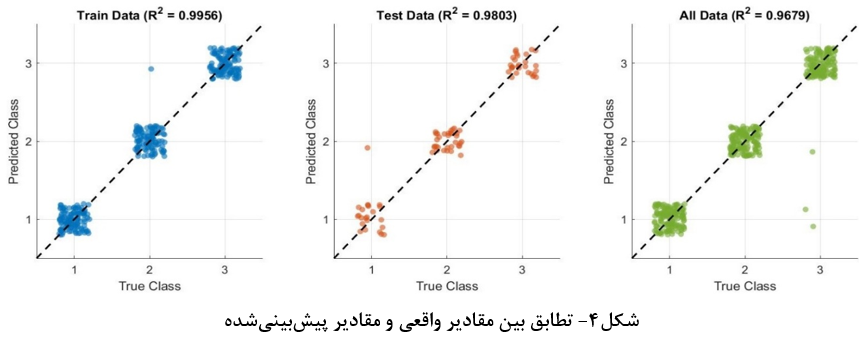
Hand movement recognition using brain signals (EEG) and muscle signals (EMG) is one of the central topics in neuroscience and biomedical engineering and has many applications in areas such as neural prosthesis control, brain-computer interfaces (BCI), and rehabilitation of patients with motor disorders. Accurate and rapid identification of hand movements can help improve the quality of life of individuals with motor disabilities and plays an essential role in the development of intelligent motor control systems. In this research, a novel approach for hand movement recognition based on EEG and EMG signals and the use of deep neural networks is presented. In this method, by employing signal preprocessing steps, nonlinear feature extraction, and classification based on neural networks, the accuracy and speed of recognition have been improved. In addition, the concept of coherence relationship between EEG and EMG signals has been used to analyze the functional connection between brain and muscle. Evaluating changes in the coherence relationship between high-density EEG and EMG signal connections has provided more accurate recognition of hand movements. The experimental results show that the proposed method has higher accuracy compared to existing methods. The use of a deep convolutional neural network (CNN) along with the analysis of coherence relationships between signals has significantly increased the accuracy of hand movement recognition; quantitative evaluations show that the model on the training, test, and total data provides stable and reliable performance with AUC values of 0.987, 0.919, and 0.971, and R² coefficients of 0.9956, 0.9803, and 0.9679, respectively.
References
Çelik, Y., & Can, U. (2026). Surface EMG-Based Hand Gesture Recognition Using a Hybrid Multistream Deep Learning Architecture. Sensors, 26(7), 2281.
Cha, D., Lee, D.-G., & Ahn, S. (2026). Adversarially regularized transformer with channel-wise noise for robust hand gesture recognition using surface electromyography. Biomedical Engineering Letters, 16(2), 463-472.
Guerrero-Mendez, C. D., & Ruiz-Olaya, A. F. (2022). Coherence-based connectivity analysis of EEG and EMG signals during reach-to-grasp movement involving two weights. Brain-Computer Interfaces, 9(3), 140-154.
Hu, X., Song, A., Wang, J., Zeng, H., & Wei, W. (2022). Finger movement recognition via high-density electromyography of intrinsic and extrinsic hand muscles. Scientific Data, 9(1), 373.
Kadavath, M. R. K., Nasor, M., & Imran, A. (2024). Enhanced hand gesture recognition with surface electromyogram and machine learning. Sensors, 24(16), 5231.
Kim, K. K., Zaluska, T. J., Skov, S., Lee, Y., Park, H., Zhong, D., Khatib, M., Nishio, Y., Jiang, Y., & Delp, S. L. (2026). A simplified wearable device powered by a generative EMG network for hand-gesture recognition and gait prediction. Nature Sensors, 1(1), 27-38.
López, L. I. B., Ferri, F. M., Zea, J., Caraguay, Á. L. V., & Benalcázar, M. E. (2024). CNN-LSTM and post-processing for EMG-based hand gesture recognition. Intelligent Systems with Applications, 22, 200352.
Maghsoudi, A., Shalbaf, A. J. J. o. B. P., & Engineering. (2022). Hand motor imagery classification using effective connectivity and hierarchical machine learning in EEG signals. 12(2), 161.
Miah, A. S. M., Shin, J., & Hasan, M. A. M. (2024). Effective features extraction and selection for hand gesture recognition using sEMG signal. Multimedia tools and applications, 83(37), 85169-85193.
Montazerin, M., Rahimian, E., Naderkhani, F., Atashzar, S. F., Yanushkevich, S., & Mohammadi, A. J. S. R. (2023). Transformer-based hand gesture recognition from instantaneous to fused neural decomposition of high-density EMG signals. 13(1), 11000.
Oyemakinde, T. T., Kulwa, F., Peng, X., Liu, Y., Cao, J., Deng, X., Wang, M., Li, G., Samuel, O. W., & Fang, P. (2025). A novel sEMG-FMG combined sensor fusion approach based on an attention-driven CNN for dynamic hand gesture recognition. IEEE Transactions on Instrumentation and Measurement.
Valdivieso Caraguay, Á. L., Vásconez, J. P., Barona López, L. I., & Benalcázar, M. E. J. S. (2023). Recognition of Hand Gestures Based on EMG Signals with Deep and Double-Deep Q-Networks. 23(8), 3905.
Xi, X., Ma, C., Yuan, C., Miran, S. M., Hua, X., Zhao, Y.-B., & Luo, Z. (2020). Enhanced EEG–EMG coherence analysis based on hand movements. Biomedical Signal Processing and Control, 56, 101727.
Yang, J., Cha, D., Lee, D.-G., & Ahn, S. (2025). STCNet: Spatio-temporal cross network with subject-aware contrastive learning for hand gesture recognition in surface EMG. Computers in Biology and Medicine, 185, 109525.
Zhang, C., Zhou, D., Fang, Y., Kubota, N., & Ju, Z. (2025). Surface EMG Sensing and Granular Gesture Recognition for Rehabilitative Pouring Tasks: A Case Study. Biomimetics, 10(4), 229.
Zhang, G., Davoodnia, V., Sepas-Moghaddam, A., Zhang, Y., & Etemad, A. J. I. S. J. (2019). Classification of hand movements from EEG using a deep attention-based LSTM network. 20(6), 3113-3122.
Downloads
Publication Timeline
- Submitted
- Revised
- Accepted
Issue
Section
License
Copyright (c) 1405 ایمان آهنیان (نویسنده مسئول); محمدرضا انصاری, فرداد فرخی (نویسنده)

This work is licensed under a Creative Commons Attribution-NonCommercial 4.0 International License.