Development of an Analytical Model and Optimization Framework for the Performance of Truncated-Pyramid Steel Vertical Links in Structures Subjected to Cyclic Loading
Keywords:
Steel vertical link, eccentrically braced frame, truncated, pyramid geometry, variable cross, section, nonlinear cyclic behavior, bilinear model, ductility, energy dissipation, equivalent viscous dampingAbstract
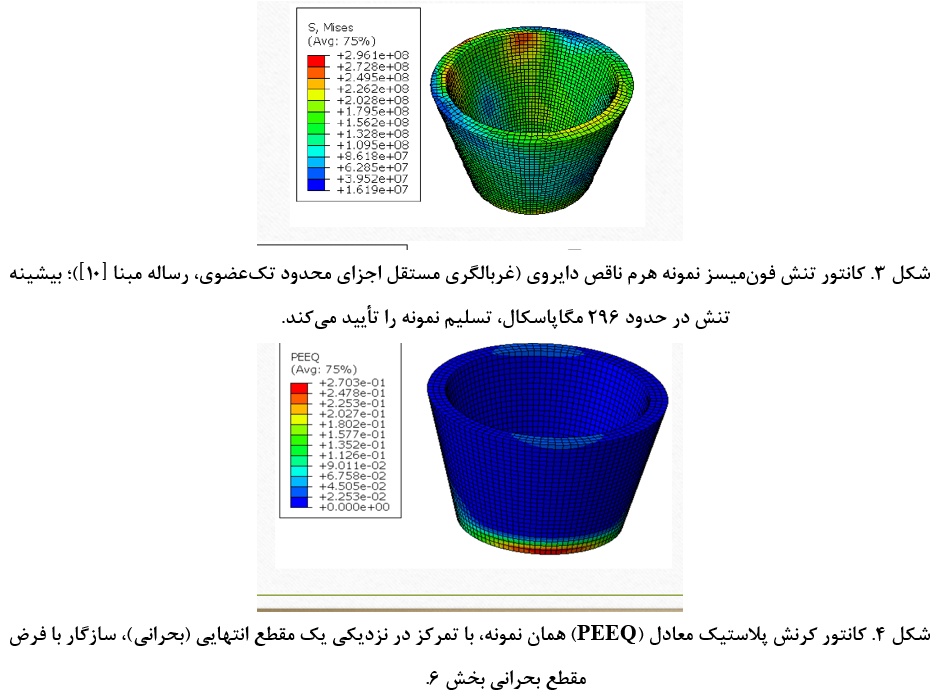
Steel vertical links are widely used as ductile shear fuses in vertical eccentrically braced frames (V-EBFs), dissipating seismic energy through controlled inelastic deformation while keeping the remaining structural members within the near-elastic range. Unlike prismatic beam-like links, which have been extensively investigated in previous studies, a practically relevant configuration employs a three-dimensional truncated-pyramid member whose circular cross-section varies continuously along the link height. Because the cross-sectional properties vary along the member axis, closed-form relationships developed for constant-section links cannot be directly applied. This study develops a dimensionless closed-form analytical framework for such variable-geometry links. First, the initial stiffness, yield force, and yield displacement are derived for a prismatic member with a constant annular cross-section. These relationships are then extended to the truncated-pyramid geometry by integrating the flexibility along the member axis and identifying the critical cross-section governing the onset of yielding. The post-yield response is represented by a three-region bilinear model, and dimensionless relationships are derived for the normalized force–displacement response, overstrength factor, energy dissipated per cycle, and equivalent viscous damping ratio, expressed solely in terms of the ductility demand and post-yield hardening ratio. A parametric evaluation of the derived relationships over a broad range of taper ratios demonstrates that approximating a truncated-pyramid member using its mean diameter systematically overestimates the initial stiffness compared with the exact solution for the variable geometry. An independent single-member finite element screening analysis of a circular truncated-pyramid specimen from the same cross-sectional category was also conducted. The stress and plastic strain fields concentrate at a critical cross-section, and the specimen exhibits a stable ductility ratio, both of which are consistent with the closed-form idealization. However, the screening specimen represents a different tapering subcase, characterized by a constant wall thickness, and lacks a documented force-transfer arm. The resulting closed-form framework can support the interpretation of experimental and finite element results, parametric design studies, and preliminary sizing of truncated-pyramid steel vertical links. The scope of the present study is limited to analytical derivation and internal consistency verification of the proposed framework.
References
[1] Popov, E. P., Kasai, K., & Engelhardt, M. D. (1987). Advances in design of eccentrically braced frames. Bulletin of the New Zealand National Society for Earthquake Engineering, 20(1), 22–29.
[2] Kasai, K., & Popov, E. P. (1986). General behavior of WF steel shear link beams. Journal of Structural Engineering, 112(2), 362–382.
[3] Mohsenian, V., et al. (2020/2021). Seismic reliability analysis of steel moment-resisting frames retrofitted by vertical link elements using combined series–parallel system approach. Bulletin of Earthquake Engineering. (Online first November 2020).
[4] Ashtari, A., & Erfani, S. (2016). An analytical model for inelastic cyclic response of eccentrically braced frame with vertical shear link (V-EBF). Case Studies in Structural Engineering, 6, 31–44.
[5] Ashtari, A., & Erfani, S. (2016). An analytical model for shear links in eccentrically braced frames. Steel and Composite Structures, 22(3), 627–645.
[6] Berman, J. W., & Bruneau, M. (2007). Experimental and analytical investigation of tubular links for eccentrically braced frames. Engineering Structures, 29(8), 1929–1938.
[7] Zheng, J., Li, A., & Guo, T. (2015). Analytical and experimental study on mild steel dampers with non-uniform vertical slits. Earthquake Engineering and Engineering Vibration, 14(1), 111–123.
[8] Seismic resilience of steel-braced frames incorporating steel slit dampers: A review and comparative numerical analysis. (2024). Civil Engineering Journal, 10(4).
[9] Chen, C. C., & Lin, C. C. (2013). Seismic performance of steel beam-to-column moment connections with tapered beam flanges. Engineering Structures, 48, 588–601.
[10] Noor anian, H. (in preparation). Nonlinear behavior of steel vertical links with truncated-pyramidal geometry [Doctoral dissertation, analytical and finite-element chapter]. Islamic Azad University, Semnan Branch.
Downloads
Publication Timeline
- Submitted
- Revised
- Accepted
Issue
Section
License
Copyright (c) 2025 حسن نورانیان (نویسنده); علی خیرالدین (نویسنده مسئول); علی همتی (نویسنده)

This work is licensed under a Creative Commons Attribution-NonCommercial 4.0 International License.