توسعه و اعتبارسنجی مدل علّی ارزیابی ناترازی انرژی در صنعت گاز ایران
کلمات کلیدی:
ناترازی گاز, الگوی مصرف, حکمرانی انرژی, زیرساخت گاز, بهرهوری انرژی, پویاییهای زمانی, مدلسازی معادلات ساختاریچکیده
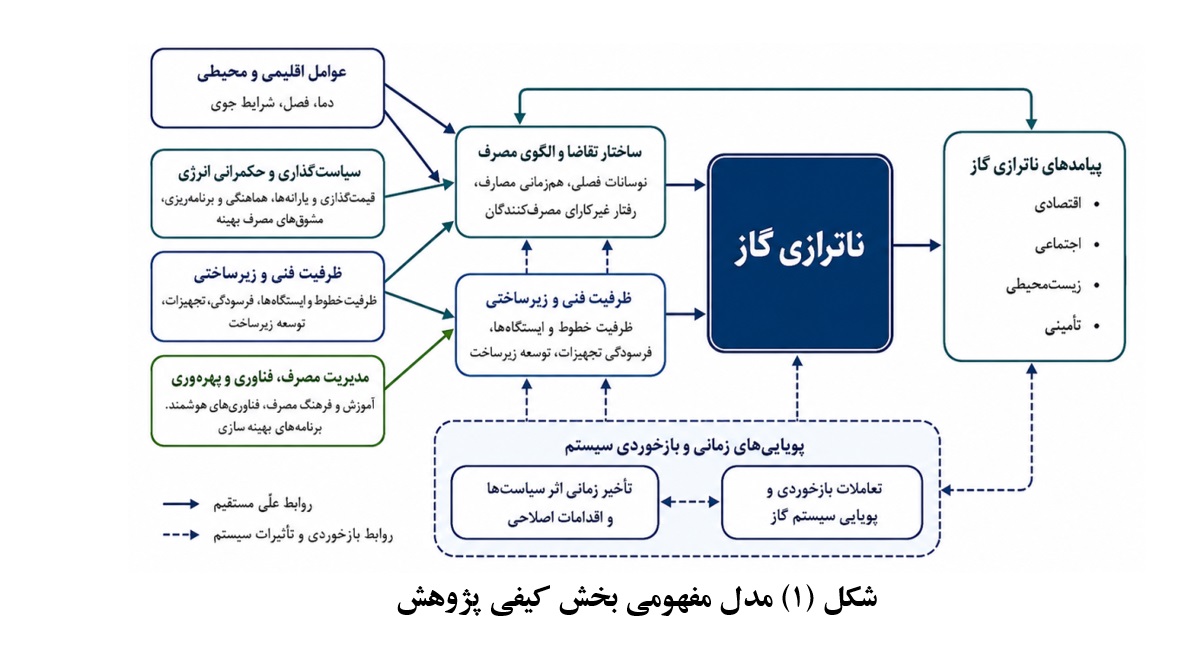
پژوهش حاضر با هدف شناسایی و تبیین عوامل مؤثر بر شدت ناترازی گاز، بررسی پیامدهای آن و ارائه یک مدل علّی و یکپارچه انجام شد. این پژوهش از نظر هدف، کاربردی و از نظر روش، آمیخته اکتشافی متوالی بود. جامعه مشارکتکنندگان بخش کیفی را خبرگان، مدیران و کارشناسان آگاه به مسائل صنعت گاز و انرژی تشکیل دادند و دادهها از طریق مصاحبههای نیمهساختاریافته تا دستیابی به اشباع نظری گردآوری و تحلیل شدند. جامعه آماری بخش کمی نیز شامل افراد دارای دانش و تجربه مرتبط با حوزه گاز و انرژی بود که دادههای ۳۰۰ مورد با استفاده از پرسشنامه محققساخته ۴۰ گویهای بررسی شد. تحلیل دادههای کمی با استفاده از نرمافزارهای SPSS و SmartPLS و روش مدلسازی معادلات ساختاری مبتنی بر حداقل مربعات جزئی انجام گرفت. یافتههای بخش کیفی نشان داد که ناترازی گاز پدیدهای چندبعدی و نظاممند است و عوامل مؤثر بر آن در شش محور اصلی شامل فشار تقاضا و الگوی مصرف، کیفیت سیاستگذاری و حکمرانی انرژی، ظرفیت و قابلیت اطمینان زیرساختی، مدیریت مصرف، فناوری و بهرهوری، فشارهای اقلیمی و محیطی و پیچیدگیهای زمانی و بازخوردی قرار میگیرند. همچنین، شدت ناترازی گاز بهعنوان سازه مرکزی و پیامدهای اقتصادی، صنعتی، اجتماعی، زیستمحیطی و امنیتی بهعنوان خروجی نهایی مدل شناسایی شدند. نتایج بخش کمی، پایایی و روایی مناسب مدل اندازهگیری را تأیید کرد و نشان داد هر هفت فرضیه پژوهش معنادارند. فشار تقاضا و الگوی مصرف با ضریب مسیر ۰٫۲۹۱، پیچیدگیهای زمانی و بازخوردی با ضریب ۰٫۲۶۷ و فشارهای اقلیمی و محیطی با ضریب ۰٫۱۶۰، اثر مثبت و معناداری بر شدت ناترازی داشتند. در مقابل، ظرفیت و قابلیت اطمینان زیرساختی با ضریب ۰٫۲۵۶−، کیفیت سیاستگذاری و حکمرانی انرژی با ضریب ۰٫۲۰۱− و مدیریت مصرف، فناوری و بهرهوری با ضریب ۰٫۱۴۷−، اثر منفی و معناداری بر شدت ناترازی نشان دادند. همچنین، شدت ناترازی گاز با ضریب ۰٫۷۱۲ اثر مثبت و قوی بر پیامدهای آن داشت. شش عامل پیشبین در مجموع ۶۲٫۹ درصد از تغییرات شدت ناترازی را تبیین کردند و شدت ناترازی نیز ۵۰٫۶ درصد از تغییرات پیامدهای آن را توضیح داد. مقادیر شاخص قدرت پیشبینی برای شدت ناترازی و پیامدهای آن بهترتیب ۰٫۴۰۸ و ۰٫۳۱۶ به دست آمد و برازش کلی مدل قابل قبول و نسبتاً مطلوب ارزیابی شد. در مجموع، نتایج نشان داد ناترازی گاز مسئلهای تکعاملی نیست و کاهش پایدار آن به مداخله همزمان در مدیریت تقاضا، توسعه و نوسازی زیرساختها، اصلاح حکمرانی، ارتقای بهرهوری و فناوری و مدیریت آثار اقلیمی و تأخیرهای زمانی نیاز دارد.
مراجع
Abbasi, J. (2017). Evaluation of gas supply-and-demand dynamics in Iran’s residential sector. Energy Research Journal, 9(3), 62–87.
Amiri, Z., Mohammadian Saravi, M., & Karimi Gorji, S. M. (2024). The role of smart technologies in improving energy policies and reducing the gas imbalance. Futures Studies and Policy-Making Studies, 10(3), 25–31.
Arpino, F., Dell’Isola, M., Ficco, G., & Vigo, P. (2014). Unaccounted-for gas in natural gas transmission networks: Prediction and analysis. IFAC Proceedings Volumes, 46(9), 1123–1127.
Botev, L., & Johnson, P. (2020). Applications of statistical process control in the management of unaccounted-for gas. Journal of Natural Gas Science and Engineering, 76, Article 103194. https://doi.org/10.1016/j.jngse.2020.103194
Farhadi, S. (2019). The effect of energy subsidy reform policies on the national gas balance. Iranian Journal of Economic Research, 21(4), 34–59.
Faryadres, S., Khani, A., & Rouhi, A. (2025). Dynamic modeling of gas consumption and pricing policies in Iran. International Journal of Energy Studies, 41(2), 77–98.
Gao, H., Wu, Y., & Chen, T. (2025). Structural equation modeling of energy imbalance and demand elasticity: Evidence from East Asia. Applied Energy, 370(5), 118–134.
Habibi, M., & Naderi, K. (2018). Price- and climate-related effects on natural gas consumption patterns. Iranian Journal of Energy Economics, 19(1), 45–68.
Heidari, F., & Nasiri, M. (2015). Energy data analysis using a system dynamics approach. Energy Engineering Quarterly, 6(3), 11–29.
Hosseini, S. (2019). An examination of natural gas consumption patterns in Iran’s power-generation sector. Journal of Engineering and the Environment, 11(2), 81–102.
Iran Energy Studies Institute. (2023). Annual report on the national gas imbalance and corrective strategies. Ministry of Petroleum.
Iran Renewable Energy Organization (SANA). (2021). Energy balance report 2021. Ministry of Energy.
Jafari, N., & Mahmoudi, F. (2022). A causal model of the effects of energy policies on natural gas consumption intensity. Journal of Energy Planning, 15(4), 92–115.
Kani, A., Abbaspour, M., & Abedi, M. (2013). Natural gas demand function in Iran: A STR approach. Journal of Natural Gas Science and Engineering, 17, 58–70. https://doi.org/10.1016/j.jngse.2014.01.003
Karimi, R., & Yousefi, M. (2019). Challenges associated with the natural gas imbalance and consumption optimization policies in Iran. Journal of Energy Economics and Management, 24(1), 54–77.
Kazemi, A., & Rezaei, D. (2021). Evaluation of energy efficiency and pricing policies in Iran’s residential gas sector. Energy Economics Quarterly, 23(2), 67–90.
Kiarts, R., & Johansen, T. (2019). Smart energy management systems for gas distribution networks. Energy Technology Journal, 14(2), 119–145.
Lee, J., & Park, S. (2023). Modeling feedback loops in national gas supply systems. Energy Economics, 122(3), 204–221.
Manara, C. (2024). Integrating SEM and SD models to study household gas demand in Europe. Energy Systems Review, 12(1), 89–105.
Mirzaei, S. (2022). Examining the effects of emerging technologies on gas consumption optimization in the industrial sector. Journal of Energy Technology, 10(3), 40–58.
Mohammadpoor, M., & Torabi, F. (2018). Big data analytics in oil and gas industry: An emerging trend. Petroleum. https://doi.org/10.1016/j.petlm.2018.11.001
Nemati, R., & Talebi, H. (2020). A systems analysis of the gas imbalance and the effects of environmental variables. Journal of Economics and Energy Research, 18(1), 70–95.
Rajabi, H., & Sadeghi-Shahdani, M. (2025). An analysis of pricing policies and natural gas consumer behavior in Iran. Iranian Economic Research Quarterly, 25(1), 55–78.
Salehi, N. (2016). A systems model of residential gas consumption with an emphasis on pricing policies. Iranian Journal of Energy Management, 7(2), 25–49.
Sedigaz. (2020). World natural gas report: Global balance, consumption, and trade patterns. Sedigaz Press.
Shafiq, M., Nisar, W. B., Savino, M. M., Rashid, Z., & Ahmad, Z. (2018). Monitoring and controlling of unaccounted-for gas (UFG) in distribution networks: A case study of SNGPL Pakistan. IFAC-PapersOnLine, 51(11), 253–258. https://doi.org/10.1016/j.ifacol.2018.08.284
Soleimani, M. (2023). An examination of the factors affecting energy efficiency in Iran’s gas-intensive industries. Iranian Journal of Energy Management, 8(2), 45–63.
Statistical Center of Iran. (2014). Statistical report on natural gas consumption in Iran. Plan and Budget Organization.
Sterman, J. D. (2000). Business dynamics: Systems thinking and modeling for a complex world. Irwin/McGraw-Hill.
Upadhyay, D., & Sampalli, S. (2020). SCADA systems: Vulnerability assessment and security recommendations. Computers & Security, 89, Article 101666. https://doi.org/10.1016/j.cose.2019.101666
Yang, L., Li, X., & Zhang, M. (2025). A system dynamics approach to modeling natural gas balance in developing economies. Energy Policy, 193(4), 122–137.
Yazdani, P. (2020). The role of technical infrastructure in reducing the gas imbalance in Iran. Journal of Energy Engineering, 5(2), 23–46.
Zafarian, A., Saberi, H., & Nasab-Nikkhah, M. (2023). The national natural gas imbalance (Part 2): A framework of proposed solutions. Islamic Parliament Research Center.
Zhao, R., & Chen, L. (2023). Evaluating energy efficiency improvement and gas consumption behavior. Journal of Cleaner Production, 396(2), 45–61.
دانلود
گاهشمار انتشار
- ارسال
- بازنگری
- پذیرش
شماره
نوع مقاله
مجوز
حق نشر 1405 رضا عبدالعلی زاده (نویسنده); مرتضی محمودزاده (نویسنده مسئول)

این پروژه تحت مجوز بین المللی Creative Commons Attribution-NonCommercial 4.0 می باشد.