ارائه مدل هوشمند برای پیشبینی افت تحصیلی دانشآموزان با تأکید بر ویژگیهای خانوادگی: مطالعه موردی استان البرز
کلمات کلیدی:
افت تحصیلی دانشآموزان, ویژگیهای خانوادگی, یادگیری ماشین, پیشبینی افت تحصیلیچکیده
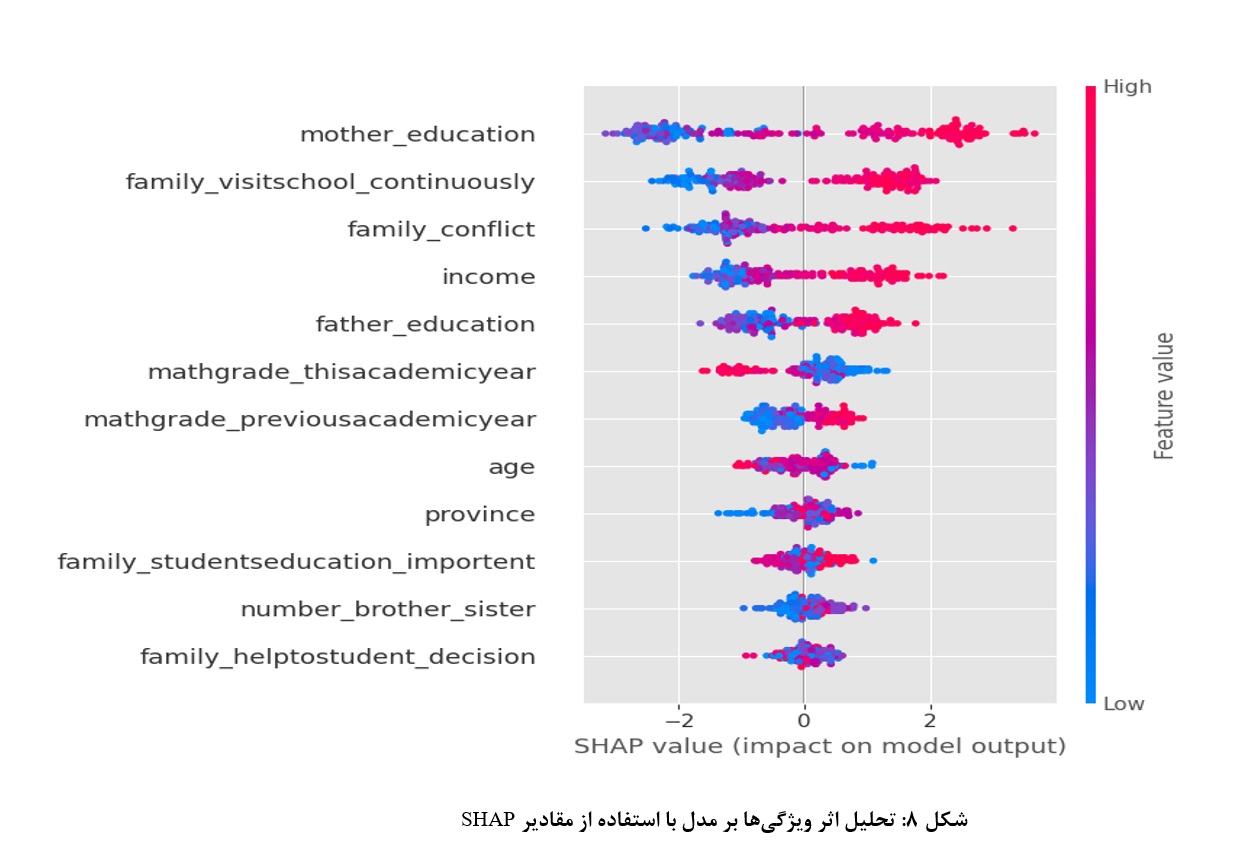
نظام آموزش و پرورش بهعنوان یکی از بنیانهای اصلی توسعه انسانی، نقشی کلیدی در ارتقاء فردی و اجتماعی ایفا میکند. افت تحصیلی دانشآموزان یکی از چالشهای جدی در این حوزه است که پیامدهای بلندمدت فردی و اجتماعی به همراه دارد. اگرچه مطالعات متعددی در سطح جهانی انجام شدهاند، پژوهشهای بومی در این زمینه هنوز محدود هستند؛ ازاینرو، انجام مطالعهای موردی در استان البرز میتواند به پر کردن این شکاف پژوهشی کمک کند. این پژوهش با هدف تحلیل و مدلسازی افت تحصیلی دانشآموزان بر اساس شاخصهای خانوادگی، بهصورت مطالعه موردی در استان البرز انجام شده است. دادههای تحقیق از مدارس دوره ابتدایی و متوسطه این استان گردآوری شده و شامل متغیرهایی همچون سطح تحصیلات والدین، میزان درآمد خانوار، نوع شغل والدین و ساختار خانواده بوده است. در راستای طراحی مدل پیشبینی افت تحصیلی، چهار الگوریتم یادگیری ماشین شامل رگرسیون لجستیک، ماشین بردار پشتیبان (SVM) با کرنل RBF، جنگل تصادفی و XGBoost بهکار گرفته شدند. نتایج نشان داد که در میان مدلهای استفادهشده، الگوریتم جنگل تصادفی بهترین عملکرد را داشته و با دقت ۹۸٪ توانست روابط پیچیده میان متغیرها را شناسایی کند. برای تحلیل روابط میان متغیرهای خانوادگی و افت تحصیلی، ابتدا از ضریب همبستگی اسپیرمن جهت بررسی ارتباطات آماری استفاده شد. سپس برای تبیین تصمیمات مدلهای یادگیری ماشین و شفافسازی نقش هر متغیر، از تحلیل SHAP بهره گرفته شد. بر اساس یافتهها، تحصیلات مادر، درآمد خانوار و تحصیلات پدر از مهمترین عوامل در بروز افت تحصیلی بودند. یافتههای این مطالعه میتواند در طراحی سیاستهای پیشگیرانه آموزشی و شناسایی بهموقع دانشآموزان پرریسک بسیار مؤثر واقع شود.
مراجع
[1] Chen, Z., Cen, G., Wei, Y., & Li, Z. (2023). Student performance prediction approach based on educational data mining. IEEE Access, 11, 131260-131272. https://doi.org/10.1109/ACCESS.2023.3254123
[2] Salam, A., & Zeniarja, J. (2023). Classification of deep learning convolutional neural network feature extraction for student graduation prediction. Indonesian Journal of Electrical Engineering and Computer Science, 32(1), 335. https://doi.org/10.11591/ijeecs.v32.i1.335
[3] Xiong, Z., Li, H., Liu, Z., Chen, Z., Zhou, H., Rong, W., & Ouyang, Y. (2024). A review of data mining in personalized education: Current trends and future prospects. Frontiers of Digital Education, 1(1), 26-50. https://doi.org/10.3389/fode.2024.00026
[4] Lin, Y., Chen, H., Xia, W., Lin, F., Wang, Z., & Liu, Y. (2023). A comprehensive survey on deep learning techniques in educational data mining. arXiv preprint arXiv:2309.04761. https://doi.org/10.48550/arXiv.2309.04761
[5] Villar, A., & de Andrade, C. R. V. (2024). Supervised machine learning algorithms for predicting student dropout and academic success: A comparative study. Discover Artificial Intelligence, 4(1). https://doi.org/10.1007/s44163-023-00079-z
[6] Yousafzai, B. K., Khan, S. A., Rahman, T., Khan, I., Ullah, I., Ur Rehman, A., ... & Cheikhrouhou, O. (2021). Student-performulator: student academic performance using hybrid deep neural network. Sustainability, 13(17),9775. https://doi.org/10.3390/su13179775
[7] Pelima, L. R., Sukmana, Y., & Rosmansyah, Y. (2024). Predicting university student graduation using academic performance and machine learning: a systematic literature review. IEEE Access, 12, 23451-23465. https://doi.org/10.1109/ACCESS.2024.3361479.
[8] Jin X. Predicting academic success: machine learning analysis of student, parental, and school efforts. Asia Pacific Education Review. 2023 Nov 29:1-22. https://doi.org/10.1007/s12564-023-09915-4
[9] Suaza-Medina, M., Peñabaena-Niebles, R., & Jubiz-Diaz, M. (2024). A model for predicting academic performance on standardised tests for lagging regions based on machine learning and Shapley additive explanations. Scientific Reports, 14(1), 25306. https://doi.org/10.1038/s41598-024-76596-3
[10] Salehi, M., Pahlavan, M., & Shojaee, A. A. (2023). The Academic Failure Model of the Senior Students of Mazandaran Province based on the Socio-Economic Position and Family Social Capital with the Mediation of Family Chaos. Iranian journal of educational sociology, 6(3), 158-168. http://dx.doi.org/10.61186/ijes.6.3.158
[11] Fernández, A., Garcia, S., Herrera, F., & Chawla, N. V. (2018). SMOTE for learning from imbalanced data: progress and challenges, marking the 15-year anniversary. Journal of artificial intelligence research, 61, 863-905. https://doi.org/10.1613/jair.1.11192
[12] Shojaei Shamirani, R., Ebrahimzadeh, A., Norouzzadeh, R., & Shafigh, N. (2021). A meta-analytic review of some family, individual, and educational factors affecting academic failure among secondary school students. DOR: 20.1001.1.10174133.1400.37.1.2.3
[13] Badraoghli Tabrizi, Z., Jalili, S., & Ehsani, R. (2017). Presenting a model to reduce academic failure using a data mining approach (Case study: Technical and Vocational Schools of Tehran). National Scientific Document, Civilica. URL: [link not provided]
[14] Souki, S., Bagheri, N., Babakhani, N., & Mojtabaei, M. (2024, January 1). Presenting a predictive model of academic progress based on self-regulated learning and family cultural capital with the mediating role of attitude toward learning among second-grade high school students in Tehran. Journal of Curriculum and Behavioral Learning (JCBL), 1(1), 71–88.
[15] Shaker, Z., & Soleimani, T. (2020). Comparison of family dysfunction, quality of life, and academic burnout in students with and without learning disabilities. 6th National Conference on New Research in the Field of Educational Sciences and Psychology of Iran, Tehran. https://civilica.com/doc/1181364
[16] Ghodousi, M., Mirsaeidi, F., & Kousha, H. (2020). Prediction and analysis of students’ performance using data mining techniques to improve academic achievement. Educational Technology (Technology and Education), 14(4), 821–834. Available from: https://sid.ir/paper/402372/fa
[17] Samadi, R., & Raaei, M. (2018). Predicting factors influencing academic success of students using data mining techniques. 4th National Conference on Technology in Electrical and Computer Engineering, Tehran. https://civilica.com/doc/928954
[18] Silva, A. (2008). Using data mining to predict secondary school student performance.
[19] Hussain, M., Zhu, W., Zhang, W., & Abidi, S. M. R. (2018). Student engagement predictions in an e‐learning System and their impact on student course assessment scores. Computational intelligence and neuroscience, 2018(1), 6347186. https://doi.org/10.1155/2018/6347186
[20] Adekitan, A. I., & Salau, O. (2019). The impact of engineering students' performance in the first three years on their graduation result using educational data mining. Heliyon, 5(2). https://doi.org/10.1016/j.heliyon.2019.e01250
گاهشمار انتشار
- ارسال
- بازنگری
- پذیرش
شماره
نوع مقاله
مجوز
حق نشر 2025 محبوبه مولوی عربشاهی, جواد وحیدی, امیر پاس لاری (نویسنده)

این پروژه تحت مجوز بین المللی Creative Commons Attribution-NonCommercial 4.0 می باشد.